Premium cuts, shaves and grooming at Emperor Cut & Laser Barbershop in Little Elm, TX.
- 7,200+ happy clients
- Experienced professional barbers
- Easy online booking
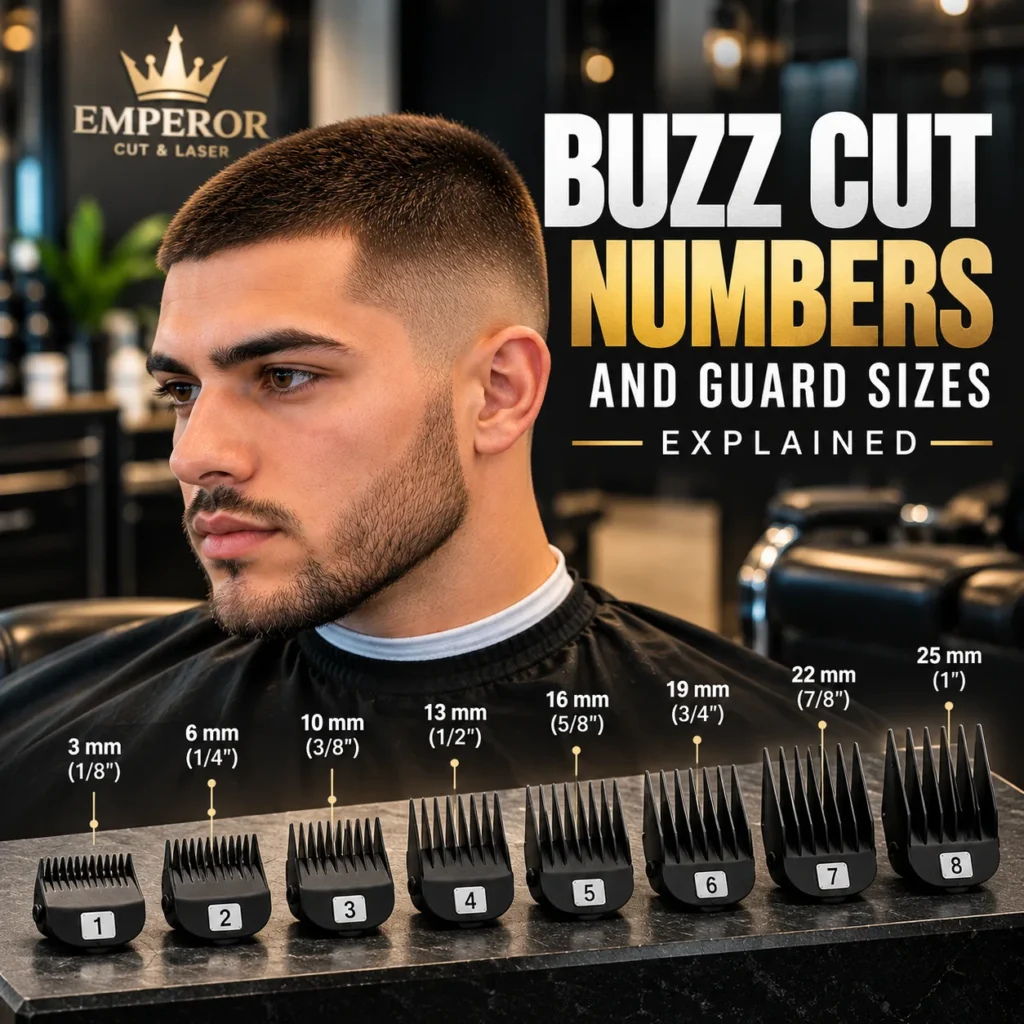
Not sure which clipper guard to ask for? This guide explains buzz cut numbers and guard sizes so you can choose the right length. When you are ready, book a buzz cut in Dallas, TX or a buzz cut fade with our barbers.
What’s in this guide8 sections
- Clipper Guard Size Chart (Number 1 to 8 in mm and inches)
- What Each Number Actually Looks Like on Your Head
- How to Choose a Number Based on Hair Type and Face Shape
- Buzz Cut Maintenance Schedule by Number
- Buzz Cut vs Skin Fade Buzz — What’s the Difference?
- Which Buzz Cut Number Should You Get?
- FAQ
- Get Your Buzz Cut at Emperor Cut & Laser
If your barber asks, “What number do you want?” and you are not sure whether to say #1, #2, #4, or something else, you are not alone. Understanding buzz cut numbers makes it much easier to explain how short you want your hair without relying on vague descriptions like “really short” or “leave it a little longer.”
Clipper guard numbers correspond to different hair lengths, usually measured in millimeters and inches. A #1 buzz cut is much shorter than a #4, while a #8 leaves enough length to create a noticeably fuller short hairstyle. The difference of just a few millimeters can change how much of your scalp is visible, how your hair sits, and how quickly the haircut starts to grow out.
This guide breaks down clipper guard sizes from #1 through #8, explains what each length actually looks like, and helps you decide what number buzz cut you should get based on your hair type, face shape, and maintenance preferences.
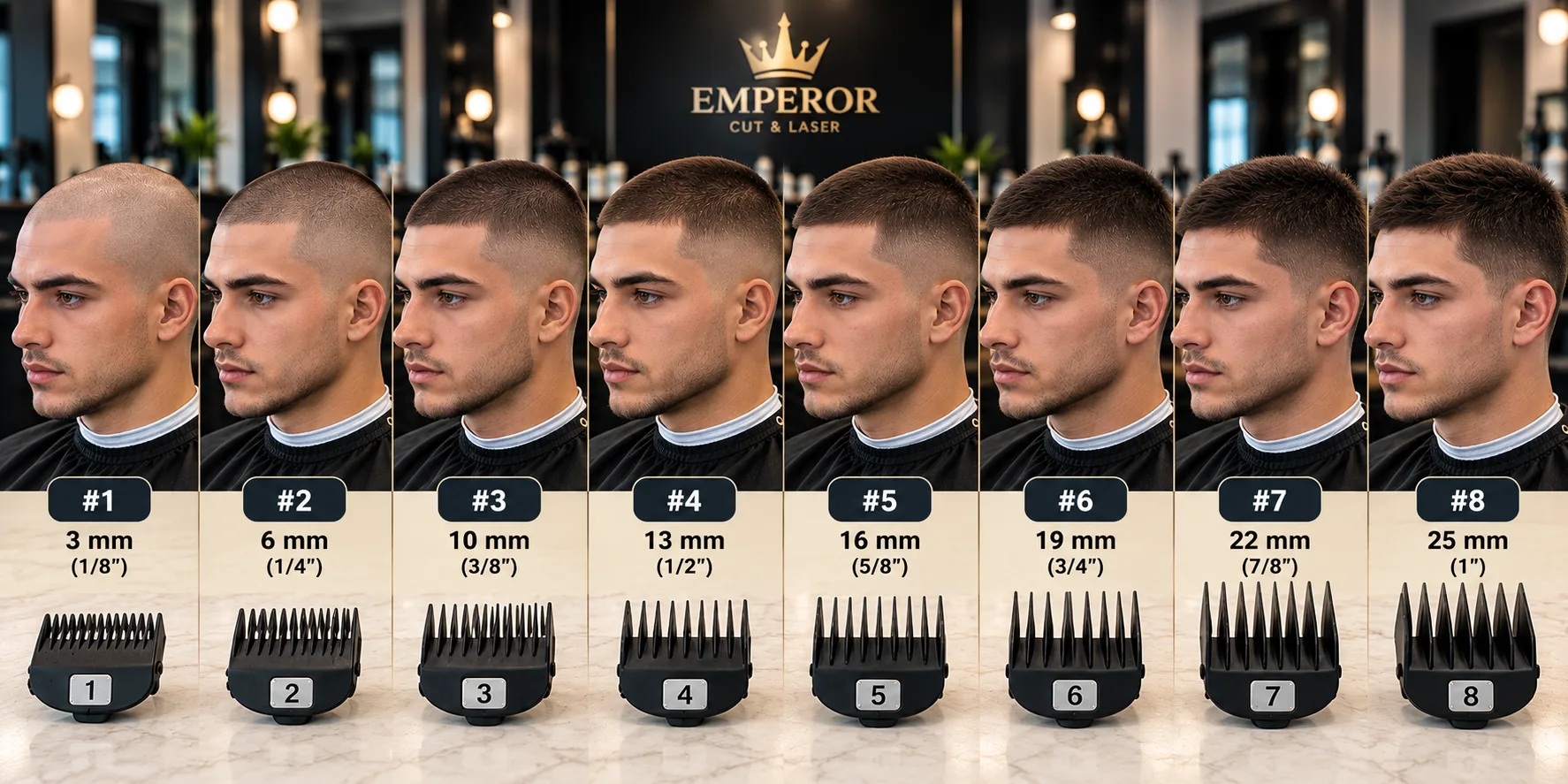
Clipper Guard Size Chart (Number 1 to 8 in mm and inches)
The easiest way to understand buzz cut numbers is to look at the guard length itself. A lower number leaves less hair, while a higher number leaves more length.
| Guard Number | Approx. Length | Inches | General Appearance |
|---|---|---|---|
| #1 | 3 mm | 1/8 inch | Very short and close to the scalp |
| #2 | 6 mm | 1/4 inch | Short, clean, and low-maintenance |
| #3 | 10 mm | 3/8 inch | Short with more visible coverage |
| #4 | 13 mm | 1/2 inch | Classic medium-short buzz |
| #5 | 16 mm | 5/8 inch | Fuller short buzz |
| #6 | 19 mm | 3/4 inch | Longer buzz with more texture |
| #7 | 22 mm | 7/8 inch | Noticeably fuller and softer |
| #8 | 25 mm | 1 inch | Longest common standard buzz guard |
These measurements are useful as a reference, but the exact result can vary slightly depending on the clipper and guard system being used. Hair texture, density, and growth direction can also make the same guard number look different from one person to another.
The basic rule is simple: the higher the number, the longer the hair remains.
If you ask for a #2, your barber knows you want approximately 6 mm of hair where that guard is used. If you ask for a #6, you are asking to keep roughly three times as much length.
That distinction becomes particularly important when you are deciding between a very close buzz and a style that still gives you some room to work with.
What Each Number Actually Looks Like on Your Head
A measurement tells you how long the hair is, but it does not always tell you what the finished haircut will look like. The same clipper guard can appear different depending on hair color, density, texture, and scalp visibility.
#1 Buzz Cut
A #1 leaves approximately 3 mm of hair. This is an extremely short haircut that keeps the hair close to the scalp and produces a very uniform appearance when used all over.
Because so little hair remains, your natural scalp shape, hairline, cowlicks, and areas of uneven density can become more noticeable. If you want the closest traditional buzz cut without going directly to a bare clipper or razor finish, a #1 is one of the shortest standard options.
#2 Buzz Cut
A #2 leaves around 6 mm of hair. It is still very short, but the extra length compared with a #1 can make a noticeable difference in coverage.
For someone who wants a clean, simple haircut without spending time styling their hair every morning, a #2 can be a practical choice. It also leaves enough hair to create a slightly softer appearance than a #1.
#3 Buzz Cut
A #3 leaves approximately 10 mm of hair. At this length, the haircut still looks clearly like a buzz cut, but there is more visible texture and fullness.
This can be a useful middle ground for someone who wants short hair but does not want the scalp to be as visible as it might be with a #1 or #2.
#4 Buzz Cut
A #4 leaves roughly 13 mm, or half an inch, of hair. This is a popular choice for someone who wants a classic buzz cut while retaining noticeable coverage.
The additional length also gives your barber more room to work with the shape of your head. Instead of looking extremely close, the haircut can have a fuller and slightly softer silhouette.
#5 Buzz Cut
A #5 leaves around 16 mm of hair. At this point, the haircut starts to feel more substantial while still being short enough to require very little styling.
If you like the convenience of a buzz cut but do not want an ultra-short finish, this length can offer a useful compromise.
#6 Buzz Cut
A #6 leaves approximately 19 mm of hair. The result is still a short haircut, but there is enough length to show more natural texture and create a less severe appearance.
It can be a good option if you want a short haircut that still feels like you have some hair to work with.
#7 and #8 Buzz Cuts
A #7 leaves about 22 mm, while a #8 leaves approximately 25 mm, or one inch.
These are longer buzz cut guard lengths. The hair has considerably more fullness, so the finished result can look closer to a very short traditional haircut than the extremely close appearance associated with a #1 or #2.
If you want the convenience of clipping your hair short while still keeping noticeable coverage, the higher guard numbers may be worth considering.
How to Choose a Number Based on Hair Type and Face Shape
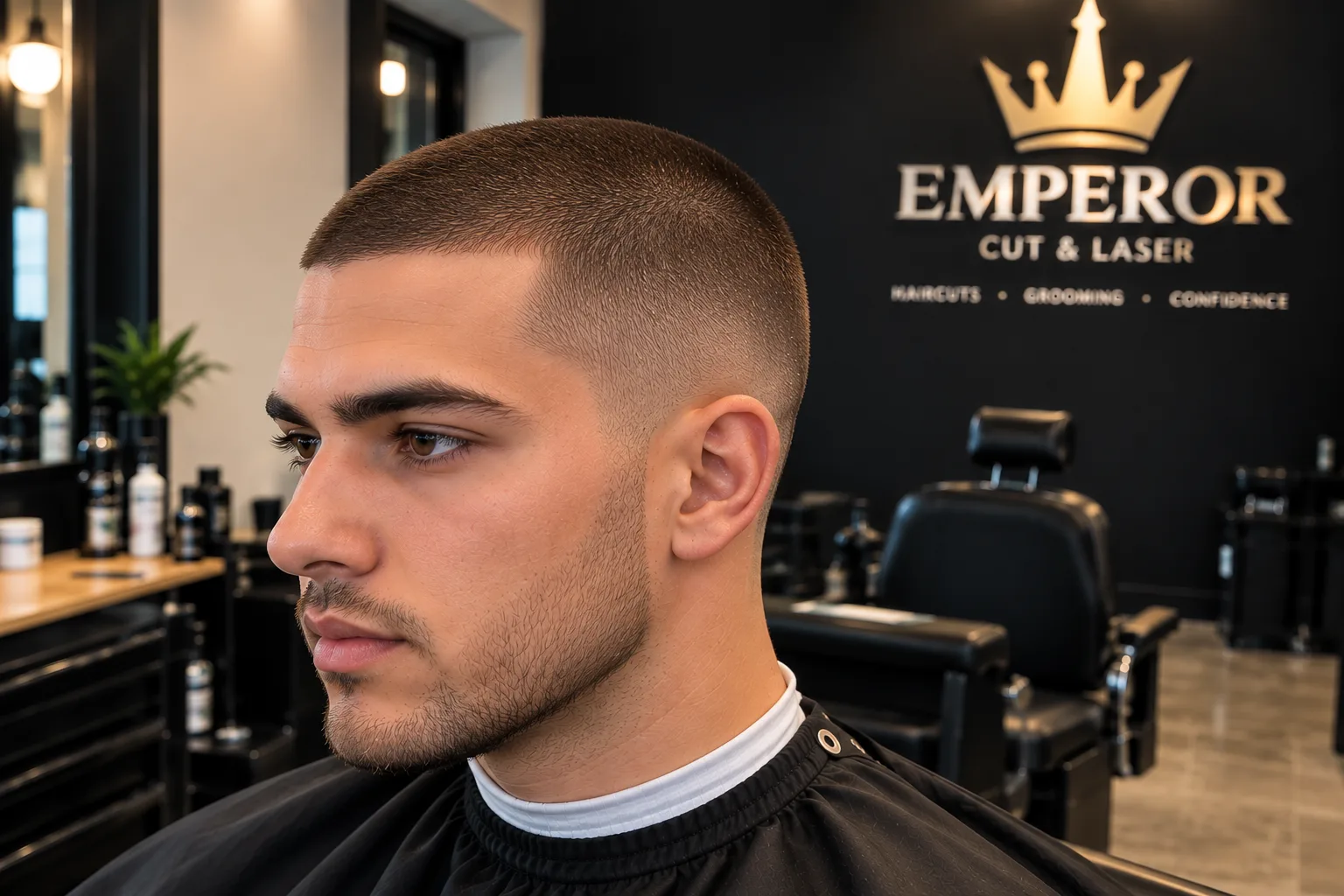
Choosing between buzz cut guard sizes is not only about how short you want your hair. Your natural hair characteristics can have a major effect on the finished result.
If you have thick, dense hair, a shorter guard can remove a significant amount of bulk while keeping the haircut neat and uniform. A #2 or #3 can make thick hair considerably easier to manage.
If your hair is fine or naturally thinner in certain areas, going extremely short can make those areas more visible. Keeping additional length with a #4, #5, or #6 may provide a little more visual coverage.
Hair texture matters too. Straight hair generally lies closer to the scalp, while curly or coily hair can retain more visible shape even when cut with the same guard. The actual appearance can therefore differ considerably between two people using the same number.
Your face shape is another factor worth discussing with your barber.
A very short buzz cut puts more attention on your facial structure because there is little hair around the head to create additional visual volume. If you have strong facial definition, a close buzz can emphasize that structure.
For a rounder face, you may prefer to keep some additional length or combine the buzz cut with a fade so that the sides are tighter while the top retains a little more presence.
If your face is naturally longer, a slightly longer buzz can help maintain some visual balance rather than exposing the entire shape of the head with an extremely close cut.
There is no universal rule saying that one buzz cut number belongs to one particular face shape. Your barber should consider the combination of your face, hairline, density, texture, and preferred appearance.
Your hairline also matters. A #1 or #2 leaves very little room to disguise the natural shape of the front hairline, so if you have a pronounced hairline or recession, it is worth discussing the result before committing to an extremely short length.
Buzz Cut Maintenance Schedule by Number
One of the biggest advantages of a buzz cut is how little styling it requires. You can usually wash, dry, and go without spending much time shaping the hair.
The trade-off is that short hair can show growth quickly.
If you get a #1, even a few millimeters of new growth can noticeably change the appearance of the haircut. Someone who wants the original close finish to remain crisp may therefore need frequent touch-ups.
A #2 or #3 gives you slightly more flexibility. The hair is still short, but the change between the freshly cut length and the grown-out length is less dramatic than it is with a #1.
With #4 through #8, you have more length from the beginning, so a small amount of new growth is usually less noticeable.
| Guard | Approx. Length | Maintenance Feel |
|---|---|---|
| #1 | 3 mm | Needs frequent touch-ups for a consistently close look |
| #2 | 6 mm | Regular maintenance keeps the finish sharp |
| #3 | 10 mm | Moderate upkeep with more room between cuts |
| #4 | 13 mm | Relatively forgiving as it grows |
| #5 | 16 mm | Easy to stretch between appointments |
| #6 | 19 mm | Noticeable length but still very manageable |
| #7 | 22 mm | Longer growth is less immediately obvious |
| #8 | 25 mm | Most forgiving of the standard buzz lengths |
These are not strict appointment schedules because everyone’s hair grows at a different rate.
If you like the freshly clipped appearance of a buzz cut, you may choose more frequent appointments regardless of the number. If you are comfortable letting the haircut become slightly longer before your next visit, a higher guard can give you more flexibility.
The way your hair grows also matters. Some people notice growth around the neckline and temples first, while others notice changes across the entire scalp.
Buzz Cut vs Skin Fade Buzz — What’s the Difference?
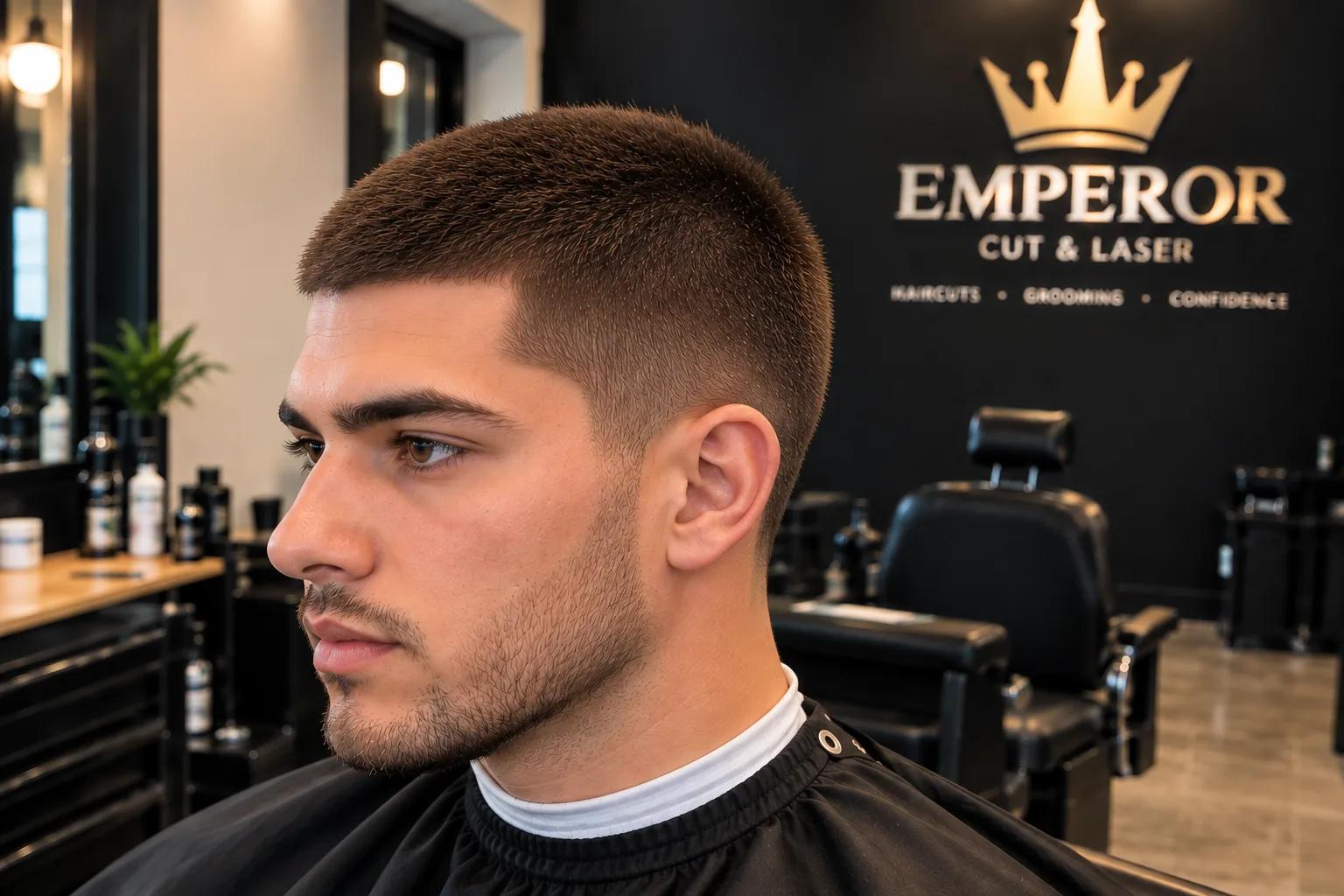
A traditional buzz cut and a skin fade buzz may look similar from a distance, but they are built differently.
With a traditional all-over buzz cut, the barber generally uses the same guard length across most or all of the head. If you ask for a #4 all over, the goal is to keep approximately that length throughout the haircut.
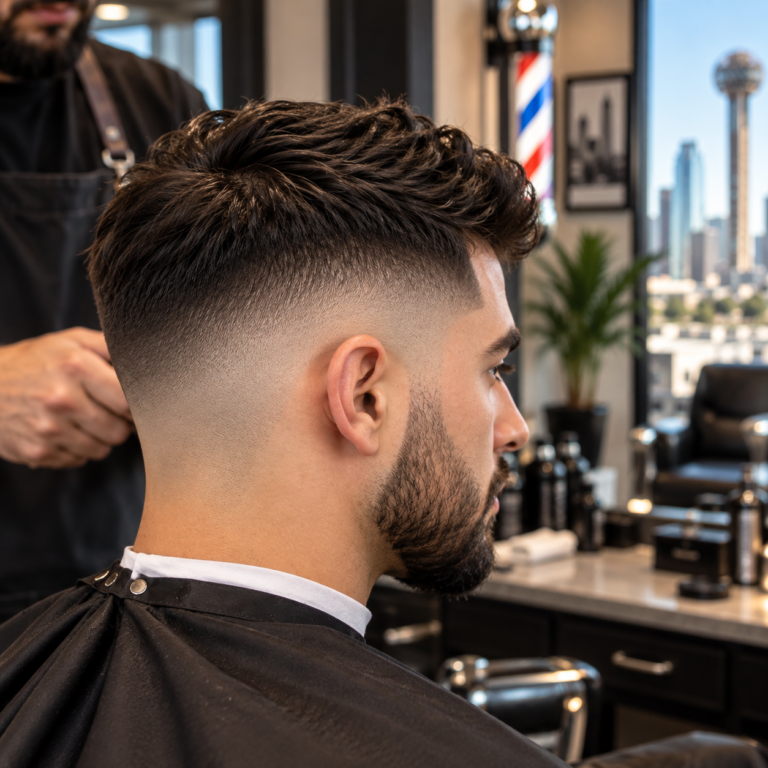
A skin fade buzz changes the length around the sides and back. The hair gradually becomes shorter as it approaches the ears, temples, and neckline, and the lowest portion can be taken down to bare skin.
For example, you might ask for a #3 on top with a skin fade on the sides. The top remains approximately at the chosen buzz length while the sides transition through progressively shorter lengths.
This creates more contrast than an all-over buzz.
A skin fade buzz can also change the perceived shape of the haircut because the tighter sides place more attention on the hair remaining on top.
If you want a straightforward all-over buzz, make that clear when you book. If you want a fade, specify the type and height so your barber does not assume you want the same guard everywhere.
For the local service, you can also review the Buzz Cut service at Emperor Cut & Laser before your appointment.
Which Buzz Cut Number Should You Get?
If you have never had a buzz cut before, it is usually easier to start slightly longer rather than immediately choosing the shortest possible number.
A #3 or #4 can give you the experience of having genuinely short hair while leaving enough length to see how you feel about the new look. If you decide you want it shorter, your barber can always remove more hair during a later appointment.
The reverse is not possible during the same haircut. Once your hair has been cut to a #1, the only way to get a #4 appearance is to wait for the hair to grow.
Think about what you want from the haircut.
If your priority is maximum simplicity, a #1 or #2 may appeal to you.
If you want short hair with a little more coverage, a #3 or #4 can be a practical middle ground.
If you want a fuller buzz with more visible texture, consider #5 through #8.
You should also tell your barber what you do not want. For example, if you want a #3 but do not want your scalp to be highly visible, mention that before the cut begins.
A useful way to communicate your preference is:
“I want a short buzz, but I still want good coverage.”
Or:
“I want something low-maintenance, but I don’t want it extremely close.”
Those descriptions give your barber context beyond the number itself.
More From Our Chair
FAQ
What number buzz cut is the shortest?
A #1 is the shortest standard numbered guard covered in this guide, leaving approximately 3 mm or 1/8 inch of hair. A clipper used without a guard can cut even closer, but that is not the same as a traditional #1 buzz cut.
Can I cut my own buzz cut at home with the same numbers?
Yes, an all-over buzz cut can be done at home with clippers and the correct guard. The more difficult parts are usually checking the back of your head, keeping the length even, and cleaning up the neckline and edges.
What number should first-timers start with?
A #3 or #4 can be a comfortable starting point for someone who has never had a buzz cut because both are clearly short while leaving more coverage than the lowest guard numbers. If you are nervous about going too short, starting with a higher number gives you more room to adjust.
Do guard numbers mean the same thing on every clipper brand?
Guard lengths are designed around standard measurements, but clipper systems and attachments can vary slightly between brands. If the exact length is important, tell your barber the number you want and explain the appearance you are trying to achieve.
Get Your Buzz Cut at Emperor Cut & Laser
Understanding buzz cut numbers takes the guesswork out of ordering a short haircut. The lower numbers create a closer finish, while higher numbers leave progressively more coverage, texture, and flexibility. If you are unsure, a #3 or #4 can be a useful starting point before deciding whether you want to go shorter.
At Emperor Cut & Laser in Little Elm, TX, you can discuss the guard length, overall shape, and whether you want an all-over buzz or a faded finish before the haircut begins. The barbershop serves Little Elm, Frisco, and the greater DFW area.
When you know which direction you want to go, book your appointment online and bring a reference photo if you have one.
Explore More Services
Book Your Appointment Today
Skilled barbers, clean tools and a relaxed chair waiting for you. Pick a time online or give us a call — we’ll take care of the rest.
Leave a Reply