Premium cuts, shaves and grooming at Emperor Cut & Laser Barbershop in Little Elm, TX.
- 7,200+ happy clients
- Experienced professional barbers
- Easy online booking
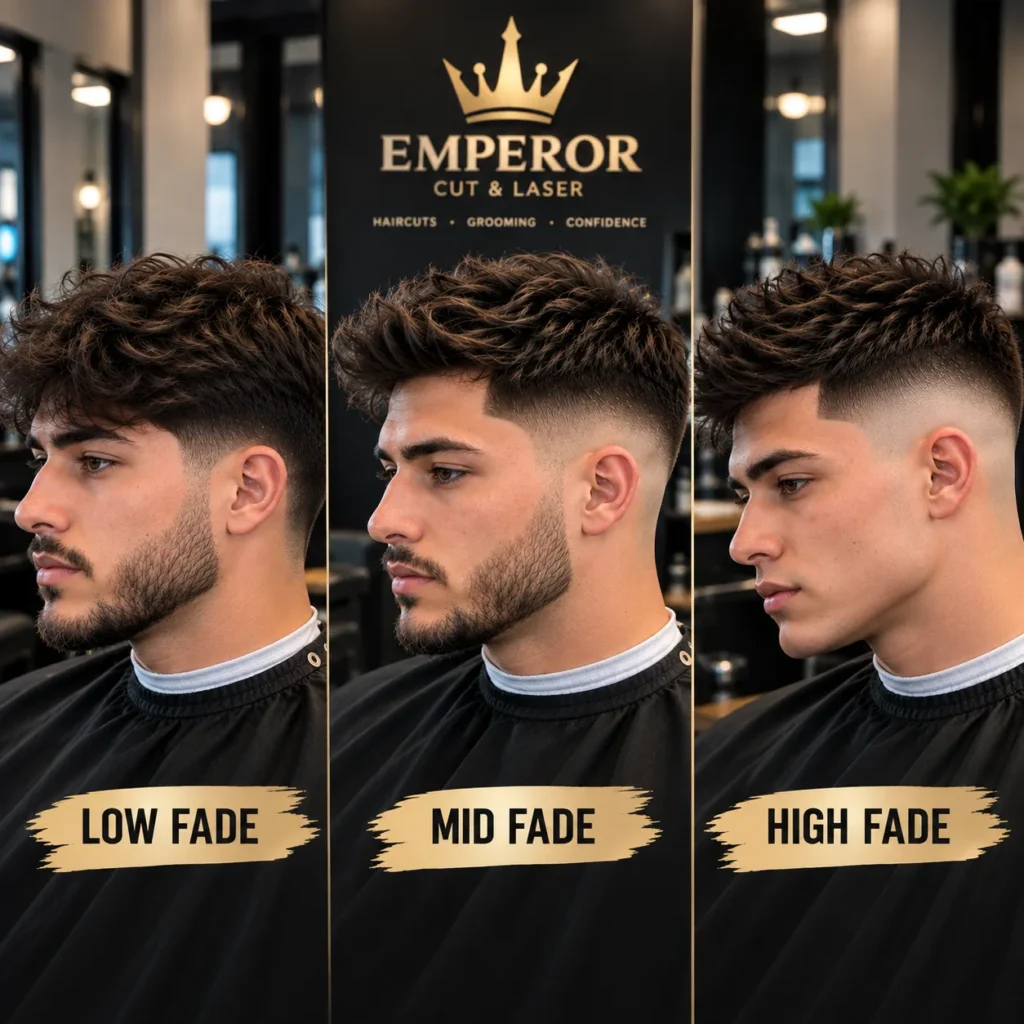
Choosing between a low fade, mid fade, and high fade can be harder than it sounds. The difference is mainly where the fade starts on the sides and back of your head, but that small change can completely alter the shape and overall feel of your haircut. If you are comparing low fade vs mid fade vs high fade, the right choice depends on your hairstyle, hair type, face shape, workplace, and how much contrast you want.
What’s in this guide9 sections
- What Does “Fade Height” Mean?
- Low Fade: Look, Best For, Examples
- Mid Fade: Look, Best For, Examples
- High Fade: Look, Best For, Examples
- Low vs Mid vs High Fade — Comparison Table
- How to Choose Based on Face Shape, Hair Type and Workplace
- How to Ask Your Barber for the Right Fade Height
- FAQ
- Choose Your Fade at Emperor Cut & Laser
A low fade keeps more weight around the upper sides of your head, while a mid fade moves the transition higher and creates a more noticeable blend. A high fade removes even more weight from the sides, giving the haircut a sharper and more dramatic appearance. None of these is automatically the right choice for everyone.
The easiest way to choose is to understand what each fade height actually does before you sit in the barber chair.
What Does “Fade Height” Mean?
Fade height refers to the point where your hair begins transitioning from longer hair into shorter hair on the sides and back. It does not describe how short the fade is at the bottom. Instead, it describes how high the fade travels up the head.
Think of the side of your head as having different zones. A low fade starts closer to the ears and neckline, leaving more length and weight above the transition. A mid fade starts around the middle of the sides, while a high fade begins farther up toward the temples and upper sides.
This distinction matters because two people can both ask for a “skin fade” but get very different-looking haircuts. A skin fade describes the shortest point reaching the skin, while low, mid, and high describe where that transition is positioned.
For example, you can have a low skin fade, a mid skin fade, or a high skin fade. The same principle applies to other fade styles.
Your barber will also consider the natural shape of your head. A fade should not simply be placed at an identical height on every client. The transition needs to work with your growth pattern, hair density, hairline, and the style you want to create on top.
Low Fade: Look, Best For, Examples
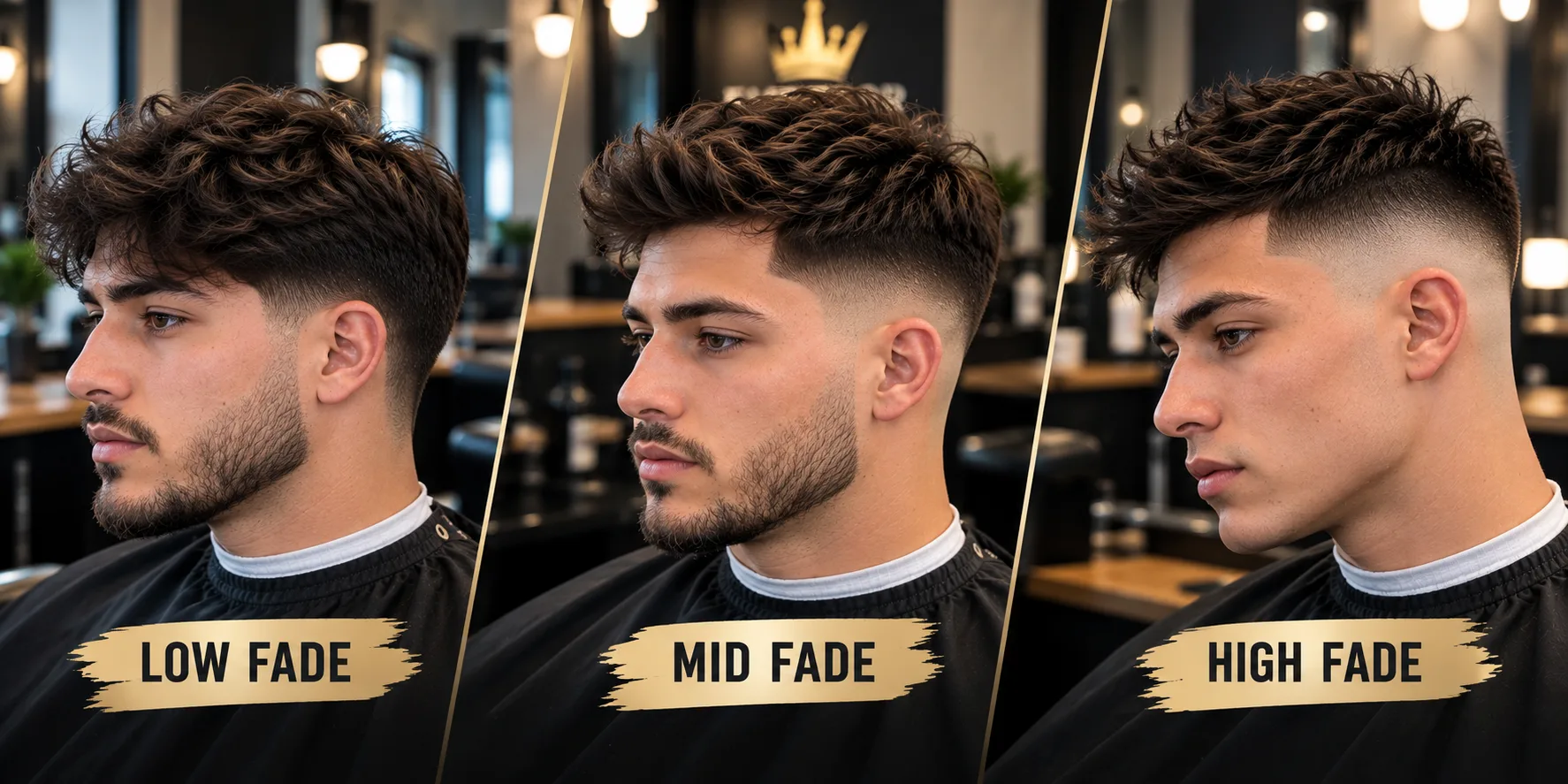
A low fade begins close to the ears and lower neckline. The transition stays relatively low, which means more hair remains on the upper sides of the head.
This makes a low fade a good option if you want a clean haircut without making the fade the dominant feature. From the front, the sides can retain a natural amount of fullness while the area around the ears looks neatly blended.
A low fade haircut can work particularly well with classic men’s hairstyles, textured crops, side parts, slick-backs, short curls, and longer hair on top. It is also useful when you want a modern haircut that still has a relatively conservative outline.
One of the biggest advantages of a low fade is versatility. If you are not ready for an aggressive change, starting lower gives you a cleaner edge without removing too much of the side profile.
A low fade can also be useful when your hairstyle depends on some natural fullness around the temples and upper sides. Instead of taking the fade high into that area, your barber can preserve more of the existing shape.
If you work in an office or prefer a haircut that transitions naturally into longer hair, a low fade is often an easy starting point. You can still make the top textured, modern, or styled while keeping the sides relatively understated.
The finished look can also vary depending on the shortest length. A low fade can finish at skin, near-skin, or a short clipper length. That gives you another layer of customization beyond simply choosing low, mid, or high.
Mid Fade: Look, Best For, Examples
A mid fade starts higher than a low fade, generally around the middle portion of the sides and back. Because the transition moves farther upward, the difference between the shorter sides and the longer hair on top becomes more visible.
A mid fade for men is one of the more flexible options because it sits between the subtle appearance of a low fade and the stronger contrast of a high fade.
If you want your haircut to look clearly faded from the front and side but do not want the sides taken extremely high, a mid fade can create that balance.
Mid fades pair well with textured tops, quiffs, messy hairstyles, short crops, curly hair, and many modern men’s cuts. The style can also be adjusted to suit different hair densities. A barber can leave more weight in certain areas or create a tighter transition depending on the shape of the haircut.
Another advantage is that a mid fade gives the haircut a defined silhouette. You get enough contrast to make the fade visible, but there is still room to preserve some fullness above the transition.
This makes the mid fade particularly useful if you want a noticeable change from a traditional haircut without moving all the way into the more dramatic appearance of a high fade.
The exact result will depend on how the top is connected to the fade. A textured top with a mid fade will have a different visual balance from a slick-back or a short crop. That is why your barber should look at the entire haircut rather than treating the fade as an isolated detail.

High Fade: Look, Best For, Examples
A high fade begins higher on the sides and back, sometimes approaching the temple area depending on the haircut. More of the side hair is removed, which creates a stronger contrast between the top and the faded sections.
A high fade haircut is usually the most noticeable of the three options. It can make a haircut look sharper and more structured because there is less weight on the sides.
High fades work well with styles where you want the top to stand out. Textured crops, short quiffs, pompadours, curls, and other styles with visible height or texture can work especially well with a high fade.
The trade-off is that a high fade leaves less room for adjustment once the sides are taken up that high. If you are unsure about the amount of contrast you want, it may be worth starting with a lower fade and moving higher at a future appointment.
Hair texture also matters. Curly and coily hair can create a particularly strong contrast when combined with a high fade because the texture on top becomes a central part of the haircut’s shape.
A high fade can also emphasize the natural contours of your head. That is not necessarily a problem, but it is one reason an experienced barber looks at your head shape and growth pattern before deciding exactly where the fade should sit.
The goal is not simply to make the sides as short as possible. The goal is to create a transition that supports the haircut as a whole.
Low vs Mid vs High Fade — Comparison Table
| Feature | Low Fade | Mid Fade | High Fade |
|---|---|---|---|
| Fade starts | Near the ears and lower sides | Around the middle of the sides | Higher toward the temples |
| Side fullness | More fullness remains | Moderate fullness | Less fullness |
| Overall contrast | Subtle | Balanced | Strong |
| Visual style | Clean and understated | Modern and versatile | Sharp and bold |
| Works with longer tops | Excellent | Excellent | Good, depending on style |
| Works with textured tops | Excellent | Excellent | Excellent |
| Maintenance appearance | Softer grow-out | Noticeable but balanced | Regrowth can become more obvious |
| Best starting point for unsure clients | Often easiest | Middle-ground option | More dramatic choice |
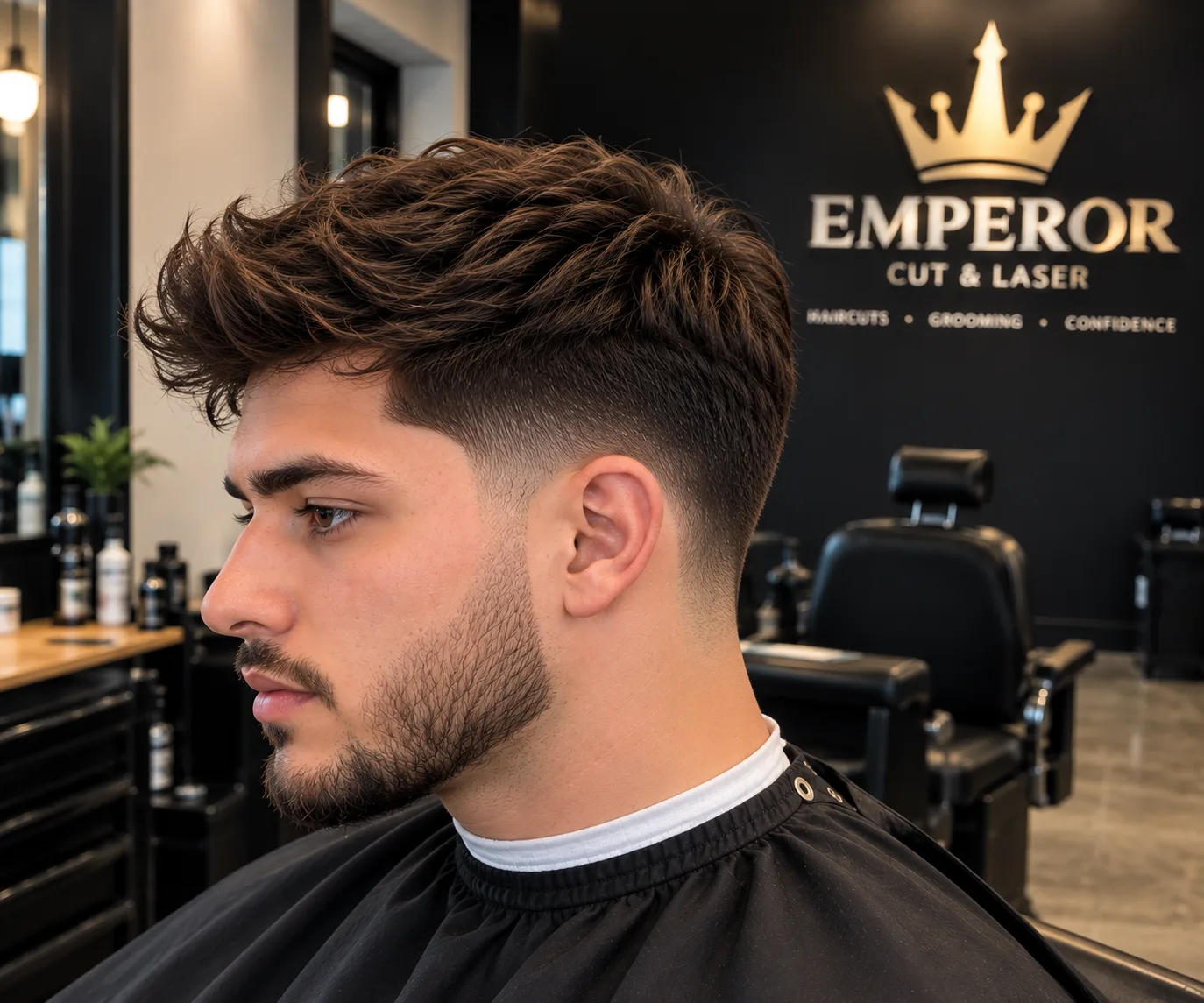
The table shows the basic distinction, but there is more to the decision than fade height alone.
A low fade can be changed significantly by using a skin finish, while a mid fade can look completely different with a longer textured top compared with a short crop. The same applies to a high fade.
That is why two haircuts with the same fade height can still look very different.
How to Choose Based on Face Shape, Hair Type and Workplace
Your face shape is worth considering, but it should not be treated as a strict rulebook. Your hairline, density, texture, and preferred hairstyle can matter just as much.
If you have a rounder face and want to create more visual height, keeping the sides tighter while leaving some height on top may help create the shape you are looking for. A mid or high fade can support that approach, depending on the rest of the haircut.
If your face is naturally longer, you may prefer a style that preserves some width around the sides instead of removing too much hair high up. In that situation, a low fade may provide a more balanced silhouette.
Hair type changes the equation too. Straight hair makes the transition between lengths very visible, while curly and coily hair can soften the appearance of certain blends because of the natural texture.
For thick hair, a fade can remove unwanted weight from the sides while keeping enough length on top for styling. For finer hair, your barber may approach the transition differently so the haircut does not appear unnecessarily thin around the sides.
Your workplace should also be part of the conversation.
If you work somewhere with a conservative dress code, a low fade can give you a clean appearance without creating an especially aggressive contrast. A mid fade can still look professional when it is properly blended and paired with an appropriate top style.
A high fade is more visually prominent, so it may be better suited to someone who is comfortable with a more noticeable haircut.
None of these choices is permanently locked in. Hair grows, and you can move between fade heights over time. The important part is communicating how much change you actually want.
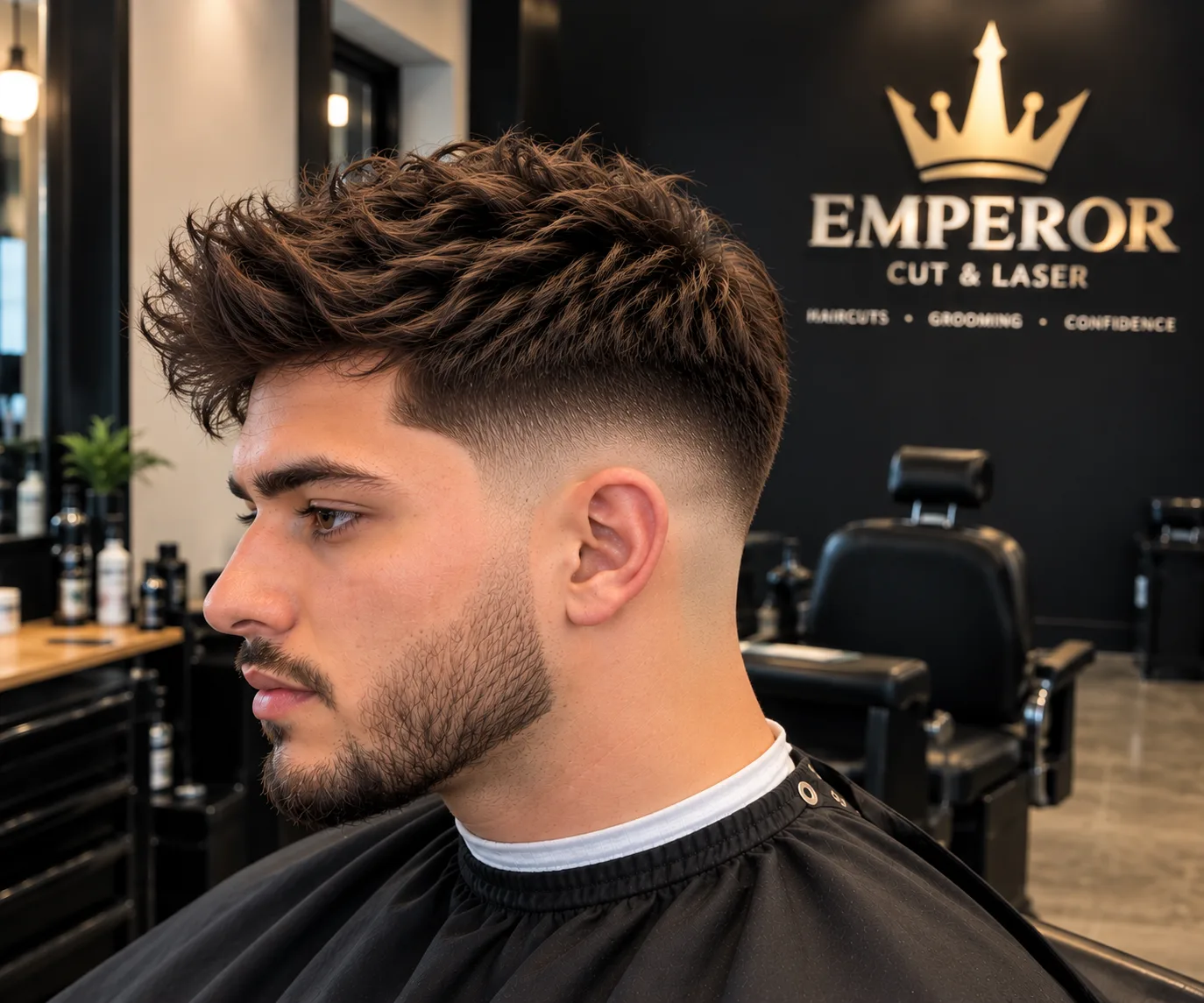
More From Our Chair
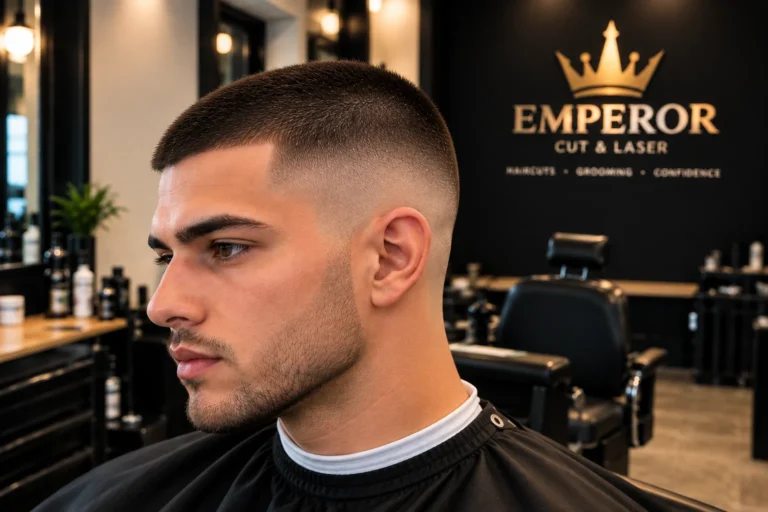
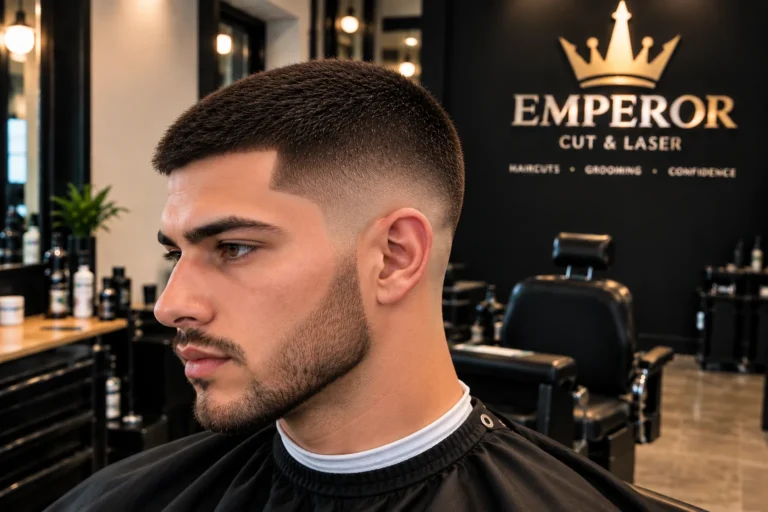
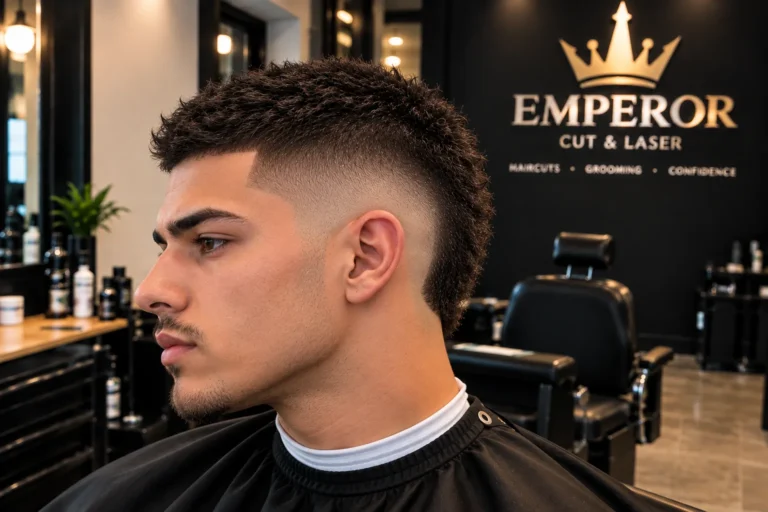
How to Ask Your Barber for the Right Fade Height
The simplest way to avoid confusion is to describe both the fade height and the finish.
Instead of only saying, “Give me a fade,” try something like:
“I want a low fade that stays below the temple and keeps some weight on the sides.”
Or:
“I’d like a mid fade with a clean blend and enough length on top for texture.”
If you want something more aggressive:
“I want a high fade that starts above the temples, but keep the top long enough to style.”
You should also tell your barber how short you want the lowest part of the fade. For example, you may want the fade taken down to the skin, or you may prefer a softer finish that leaves some visible hair.
If you have a reference photo, show it. A photo can communicate the exact placement and overall silhouette much faster than a long explanation.
It is also helpful to mention what you do not want. If you had a previous haircut where the fade went too high, say so before the haircut starts. That gives your barber useful information before making the first cut.
And if you are still unsure, say that. A good consultation is part of getting the haircut right. Your barber can look at your current length, hair texture, head shape, and desired style and explain what each option would do.
FAQ
Which fade height is most professional for the office?
A low fade is often easier to keep understated because the transition stays lower on the sides and preserves more natural fullness. A clean mid fade can also work well in professional settings, depending on the workplace and the rest of the haircut.
Does a high fade require more frequent touch-ups than a low fade?
The haircut’s maintenance depends on how quickly your hair grows and how sharp you want the fade to remain. Because a high fade creates stronger contrast, regrowth can become more noticeable to someone who prefers a very crisp finish.
Can I switch between fade heights easily over time?
Yes. You can move from a low fade to a mid or high fade as your hair grows, although the transition may require enough length to rebuild the shape you want. Your barber can also adjust the fade height gradually rather than making a major change in one appointment.
Which fade height works best with curly hair?
Curly hair can work with low, mid, or high fades, so the best choice depends on how much curl and volume you want to keep around the sides. A mid or high fade can create strong contrast with curls on top, while a low fade preserves more of the natural shape around the sides.
Ready to try one? Our barbers in Little Elm, just north of Dallas, cut every fade height. Book a skin fade in Dallas, TX, a classic men’s haircut in Dallas, or keep it simple with a buzz cut. Finish any fade with a clean beard trim.
Choose Your Fade at Emperor Cut & Laser
The choice between low fade vs mid fade vs high fade comes down to the look you want, how much side weight you prefer, and how noticeable you want the transition to be. If you are unsure, a low or mid fade gives you a practical starting point without committing immediately to the strongest contrast. Bring a reference photo, explain what you want to keep on top, and let your barber help you refine the final shape.
At Emperor Cut & Laser in Little Elm, TX, your fade can be tailored to your hair type, preferred style, and everyday routine. We serve clients in Little Elm, Frisco, and the greater DFW area.
When you are ready, book your next haircut online and come in with a clear idea of the fade height you want.
Explore More Services

Book Your Appointment Today
Skilled barbers, clean tools and a relaxed chair waiting for you. Pick a time online or give us a call — we’ll take care of the rest.
Leave a Reply